
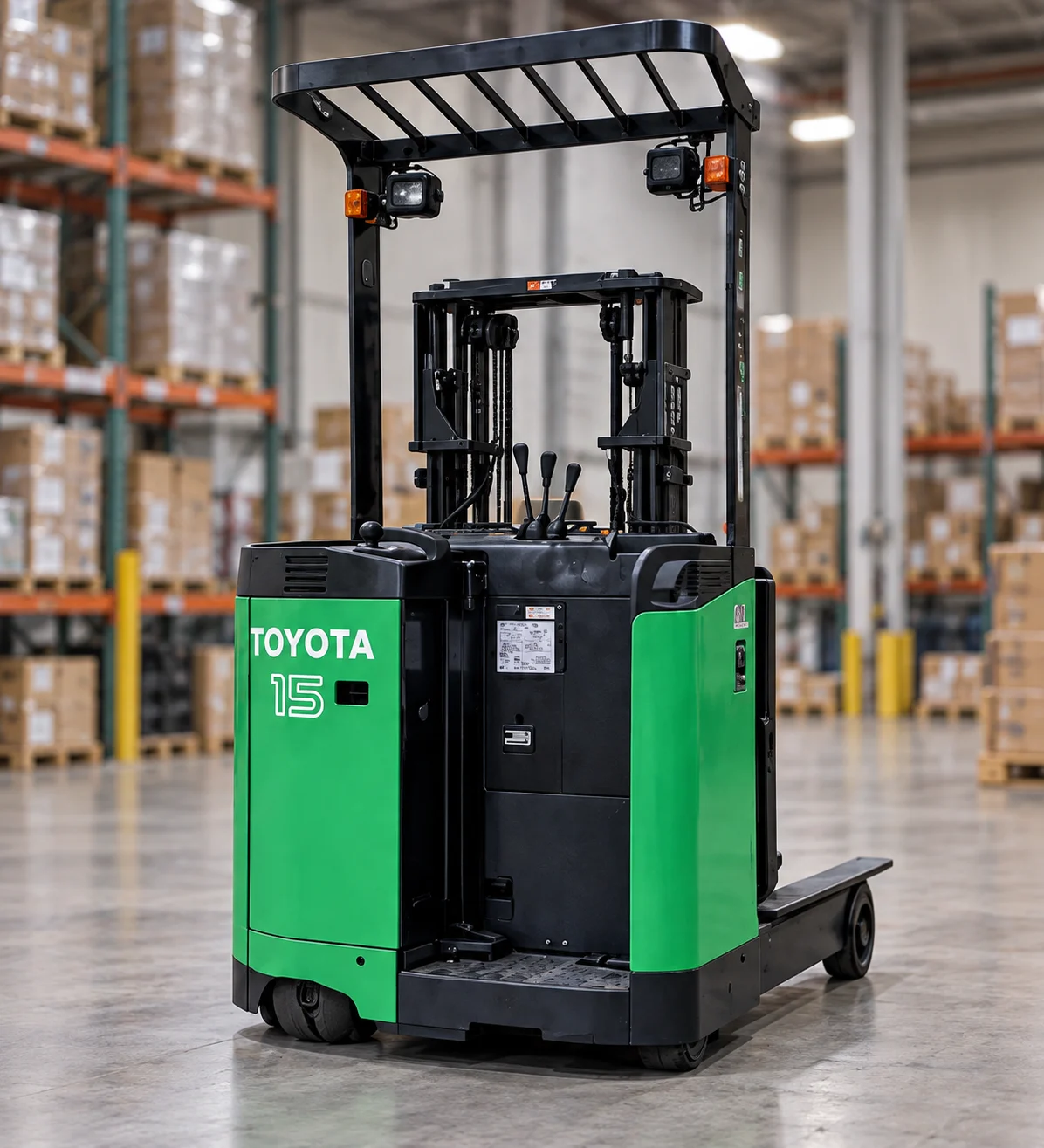
The choice between a reach truck and a forklift starts with how goods move through your warehouse. Review racking height, aisle width, load centre, floor condition, turning space and whether the work is primarily indoor or includes loading and unloading areas.
No single specification fits every Singapore operation. Confirm the individual truck’s rated capacity and configuration for the intended task, rather than transferring a specification from another listing or machine.
Start with the material flow
The choice between a reach truck and a forklift starts with how goods move through the warehouse. Review where pallets arrive, where they are stored, the route between those points and where operators need to turn, lift or stage loads.
A truck that suits one part of an operation may not suit every task. It is useful to separate racking work, loading and unloading, transfer routes and any outdoor or uneven-surface activity when describing the requirement.
Check the dimensions that influence the decision
- Highest pallet position, rack design and required lift height.
- Aisle width, turning area and restricted clearances.
- Pallet weight, dimensions and load centre.
- Floor condition, gradients, dock areas and travel distance.
- Charging location, operator visibility and pedestrian separation.
Avoid relying on a label alone
“Reach truck” and “forklift” are useful categories, but neither is a complete specification. The capability of a particular machine depends on its configuration, attachment, mast, rated capacity and operating environment.
For Singapore warehouses with tighter footprints or higher racking, small site details can have a significant impact. Confirm the exact truck’s capability for the intended load and task rather than applying a specification from another unit.
Create a brief before you compare equipment
A short site brief with measurements, pallet information, photos of the racking and the daily work pattern is often more valuable than a long list of model names. It gives everyone involved a common point of reference.
Once those details are clear, available equipment can be considered more meaningfully against the operation.