
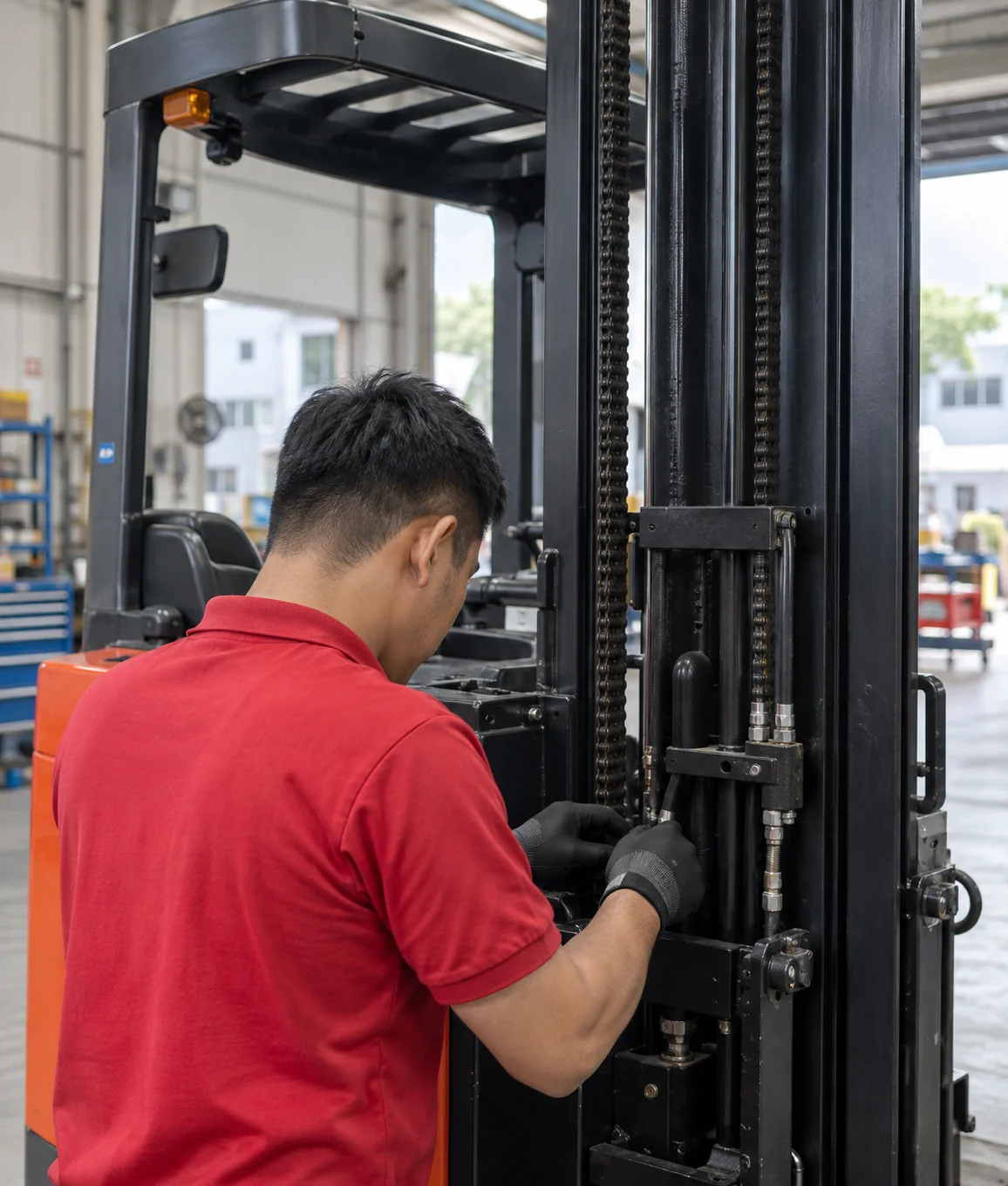
Safe material handling depends on trained and authorised operators, pre-operation checks, suitable travel routes and loads within the truck’s rated capability. These are practical matters for any warehouse using reach trucks or forklifts.
From 1 January 2027, Singapore requires forklift operators to attend refresher training at least once every three years. BL Reach Truck does not provide operator training through this website; consult the Ministry of Manpower for the current requirements and approved training information.
Safe operation begins before the truck moves
Forklift and reach truck safety depends on the operator, the equipment, the load and the workplace all working together. Everyday planning includes a suitable travel route, clear sightlines, loads within the truck’s rated capability and separation from pedestrians where necessary.
Pre-operation checks are part of that routine. They help identify visible damage, leaks, tyre or wheel issues, fork condition, controls, warning devices and any indicator that needs attention before the truck is used.
Keep the workplace information practical
- Confirm that operators are trained and authorised for the work assigned.
- Keep the daily route, loading area and charging area clear and understood.
- Use the equipment within its rated capability and intended operating environment.
- Record and escalate faults or damage instead of continuing to use affected equipment.
- Review local arrangements when racking, loads, traffic flow or staffing changes.
Singapore refresher-training requirement
From 1 January 2027, the Ministry of Manpower requires forklift operators in Singapore to attend refresher training on forklift operation at least once every three years. The requirement applies in addition to the initial WSQ Operate Forklift Course; operators of forklifts above five tonnes also require the relevant Heavy Forklift Course.
BL Reach Truck does not provide operator training through this website. Employers should refer directly to the Ministry of Manpower and accredited training providers for current requirements, course availability and official guidance.
Use guidance alongside the actual workplace assessment
An article cannot replace site-specific risk management, training or supervision. Each workplace has its own traffic pattern, equipment mix, load types and access considerations.
Use official guidance as the source for regulatory requirements, then apply it to the conditions that operators face each day.